
Every admissions cycle, qualified applicants get rejected. Not borderline applicants. Not students who coasted through their prerequisites. Genuinely strong candidates with competitive GPAs, solid MCAT scores, real clinical experience, and compelling stories — rejected. Sometimes from every school they applied to.
If you have been through this, or you are preparing to apply and quietly terrified it will happen to you, this post is worth reading carefully. Because the answer to why it happens is not what most people think — and understanding it changes everything about how you approach your application.
In Canada, acceptance rates at many medical schools sit below 10 to 15 percent. In the US, more than half of all applicants do not receive a single offer in a given cycle. The majority of people who eventually become physicians were rejected at least once. That part rarely gets talked about.
The assumption that gets applicants in trouble
Most pre-med students operate under a version of the same belief: if my numbers are strong enough, I will get in. Build the GPA. Hit the MCAT target. Check the boxes on clinical hours and research. Apply. Wait.
This belief is not entirely wrong. Your metrics matter. A GPA below 3.5 or an MCAT below 505 will close doors before anyone reads your application. That is real and it should not be minimized.
But here is what that belief misses entirely. At a certain point — and that point is lower than most applicants think — metrics stop being the deciding factor. When a school receives thousands of applications and the average accepted GPA is 3.85, they are not choosing between a 3.9 and a 3.7. They are choosing between a 3.9 and another 3.9. And at that level, the metrics are no longer what separates the accepted from the rejected.
Strategy is.
What actually determines who gets in
School selection
This is the single most common reason strong applicants fail cycles, and it is the one least discussed. Applicants build school lists based on rankings, reputation, name recognition, and vague notions of fit. They apply to schools that will never seriously consider their profile — because of residency bias, GPA cutoffs they do not know exist, research expectations that are not published anywhere, or mission alignment issues that only become clear when you know how to read a program.
A 3.85 GPA and a 512 MCAT is a genuinely competitive profile. It is also a profile that will get ignored by certain schools and welcomed by others. Applying to the wrong rooms with the right profile is how strong applicants lose entire cycles.
I have reviewed hundreds of applications from qualified candidates who were rejected not because of their profile, but because their school list was built on guesswork. They had the stats. They applied to the wrong schools.
The personal statement
Admissions committees read thousands of personal statements. Most of them say the same things. A formative experience that sparked an interest in medicine. A patient interaction that reinforced the calling. A desire to give back to the community.
These are not bad themes. They are insufficient ones. The personal statement that moves an application forward is the one that reveals something specific, honest, and unconventional about who you are and why medicine is the right path for you specifically — not for a generic future physician.
The problem is that most applicants write what they think an admissions committee wants to hear rather than what is actually true about them. The result is a statement that reads like it could have been written by anyone. In a pool of thousands, that is not enough.
Research narrative
Research is one of the most misrepresented parts of a medical school application. Applicants either dismiss it because they do not have enough of it, or list it without understanding how to present it in a way that means something to a committee.
Admissions committees are not counting your research hours. They are assessing whether you understand what you did, why it mattered, and what it taught you about scientific thinking, intellectual curiosity, and the ability to contribute to medicine beyond patient care. A student with 200 research hours who can articulate their work precisely will outperform a student with 500 hours who cannot explain what they were actually studying.
Timing and cycle construction
Medical school admissions operates on rolling timelines. Schools review files as they arrive and extend interviews before the cycle is complete. An application submitted in August competes in a fundamentally different pool than the same application submitted in October — even if the content is identical.
Most applicants do not know this. They submit when they feel ready rather than when the cycle demands it. The result is a competitive application that arrives too late to be evaluated in the strongest part of the pool.
Application construction as a whole
Your application is not a collection of independent documents. Your personal statement, your activity descriptions, your secondary essays, and your school list should all tell a coherent story about who you are and why each school is a genuine fit for you specifically.
When those pieces are not aligned — when the personal statement describes someone different from the activity descriptions, or when the school list does not reflect the values expressed in the essays — committees notice. Not consciously, necessarily. But the application does not hold together, and it does not advance.
What this means for your application
None of this is meant to be discouraging. It is meant to be clarifying.
If you have a strong academic profile and you have not received offers, the most likely explanation is not that you were not qualified. It is that your application was not built to show it effectively. That is a solvable problem. It is also a problem that gets worse, not better, when the response to a failed cycle is simply to reapply with the same materials and a slightly better MCAT score.
Reapplying is not about fixing what is broken. It is about understanding what the committee actually saw — and rebuilding with that clarity. That is a different process entirely, and it requires honest analysis before it requires any writing.
The applicants who get in — not on the first try necessarily, but eventually — are the ones who stop guessing and start building with intention. They understand which schools will actually look at their profile seriously. They write a personal statement that is specific and true rather than polished and generic. They present their research in a way that demonstrates scientific thinking rather than just hours logged. And they apply at the right time with materials that hold together as a complete picture of who they are.
That is not luck. That is strategy.
Not sure what went wrong in your last cycle?
A free audit with Dr. Gill will identify exactly where your application fell short and what needs to change before you reapply. No payment. No commitment. Just clarity.
Book Your Free Audit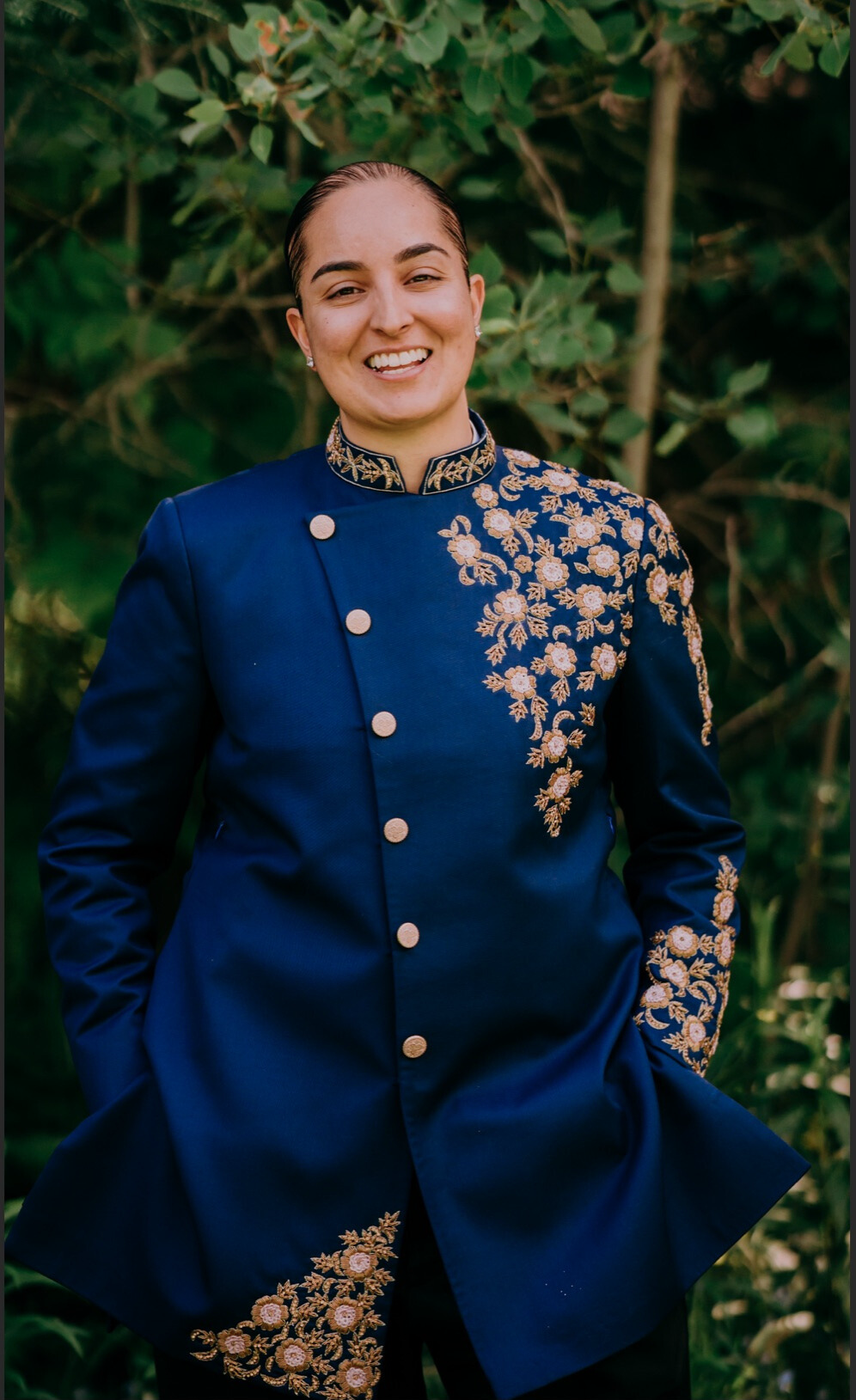
Dr. Gagan Gill, PhD
Dr. Gill holds a PhD in Chemical and Biological Sciences from Wilfrid Laurier University and an MSc in Chemistry from the University of Waterloo. Dr. Gill navigated the full pre-medical process, received admissions to Canadian medical schools, and chose the PhD path instead. Gill Academic Consulting was founded after working inside a large consulting firm and seeing firsthand how volume-driven advising consistently fails qualified applicants. Dr. Gill has guided 100+ applicants across medical, dental, law, and graduate programs.